There are many people today, a lot in the church, who believe that the American Revolution was an act of rebellion against God and in direct violation of scripture. Romans 13 is the most frequently cited scripture to back this belief.
Is it true? Was our country founded on disobedience to God and His word? Are the blessings we have received as a country in spite of these actions of our founding fathers instead of because of them? Did they act out of rebellion and petty reasoning?
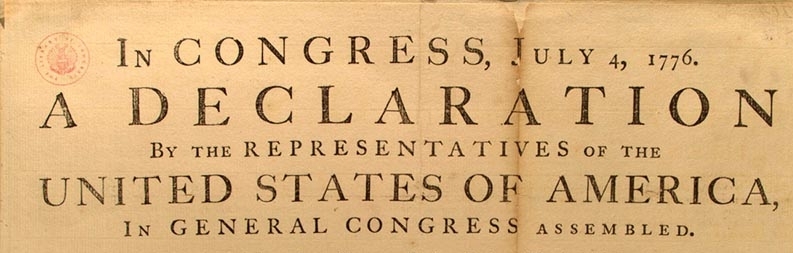
While I can point to several documents and letters written by these men that we can go to for the answer, I think the best answer is in the most well-known document of our country.
“We hold these truths to be self-evident: That all men are created equal: that they are endowed by their Creator with certain unalienable rights: that among these are life, liberty, and the pursuit of happiness.”
Just about everyone knows the beginning of the Declaration of Independence, but after “we hold these truths to be self-evident” most of us really don’t know what the rest of it says. It’s really a shame, too.
Our founding fathers didn’t take the start of this country lightly. They spent a lot of time in prayer and studying the law to be sure that they had legal and biblical grounds:
“Let us with candor judge whether they are constitutionally binding upon us; if they are, in the name of justice let us submit to them, without one murmuring word.” (Joseph Warren, 1772).
But were there legal and biblical grounds?
An Act of Rebellion?
First, let’s set the record straight about the start of the American Revolution: A common misconception is that the Americans rebelled against the current ruling authority and started a war. But let’s look at what Thomas Jefferson said in the Declaration:
“He (the King of England) has abdicated government here, by declaring us out of his protection, and waging war against us.”
Did you catch that? The king declared war on the American Colonies! This was in the king’s speech to Parliament on October 26, 1775. That same year the British Parliament passed the Prohibitory Act which stopped all trade between the American Colonies and other parts of the world. This was a declaration of economic warfare by Britain and her king. And this was after they had gone through all the proper and legal channels to petition the king:
“In every stage of these oppressions we have petitioned for redress in the most humble terms: our repeated petitions have been answered only by repeated injury.”
“You cannot but remember how reluctantly we were dragged into this arduous contest; how repeatedly, with the earnestness of humble entreaty, we supplicated a redress of our grievances from him who ought to have been the father of his people. In vain did we implore his protection: in vain appeal to the justice, the generosity, of Englishmen; of men, who had been the guardians, the assertors, and vindicators of liberty through a succession of the ages.” -An Address of the Congress, 1778
What was this oppression? Was it worth making a big deal about and risking the wrath of the king? Was it important enough for them to stand up to the authority they were under? God never condoned just sitting by and letting those in authority do as they pleased without check. That is an easy way for evil to run rampant. Even Paul confronted the authorities when they broke the law and beat and imprisoned him and Silas illegally (Acts 16).
This is why it is so important to know, not only God’s law, but those of your country and even your state. Which brings me to the next point.
Lawless Violations
These men knew their English law. And they knew what treatment and rights they should be receiving as an English colony. But the king did not see it that way:
- He refused his assent to laws most wholesome and necessary for the public good.
- He forbid his governors to pass laws of immediate and pressing importance.
- He called legislative bodies together at places so difficult, for the sole purpose of fatiguing them to get them to comply with his measures.
- He dissolved representative houses who opposed his invasion on the rights of the people.
- After they were dissolved, he refused for a long time to allow others to be elected.
- He tried to prevent the population of the states.
- He obstructed the administration of justice, by refusing to assent to laws for establishing judiciary powers.
- He made judges dependent on his will alone for the tenure of their offices and their salaries.
- He sent swarms of officers to harrass the people and eat their food.
- In times of peace he kept armies among the people without consent of the legislatures.
- He tried to render the military independent of, and superior to, the civil power.
- He attempted to subject them to a jurisdiction that was foreign to their English constitution and not known by their laws.
- He quartered large bodies of armed troops among them.
- He protected these soldiers from punishment for any murders they should commit, by mock trial.
- He cut off their trade with all parts of the world.
- He imposed taxes without consent.
- He deprived them of the benefits of trial by jury.
- He transported them beyond the seas to be tried for pretended offences.
- He abolished the free system of English laws in a neighboring province, and established an arbitrary government, enlarging its boundaries and thus render it a fit instrument to introduce the same absolute rule in the colonies.
- He took away their charters, abolished valuable laws and altered the forms of government.
- He suspended their own legislatures.
- He abdicated government in the colonies and waged war on them.
- He plundered their seas, ravaged the coasts, burnt the towns, and destroyed the lives of the people.
- He was transporting large armies of foreign mercenaries to complete the works of death, desolation and tyranny…in cruel and barbarous ways.
- He constrained their citizens, taken captive on high seas, to bear arms against their country, and to kill or be killed by their friends and brothers.
- He excited domestic violent uprisings, and endeavoured to urge on the Indians to fight.
- He refused to hear the petitions brought before him and responded with more oppression.
“A prince, whose character is thus marked by every act which may define a tyrant, is unfit to be the ruler of a free people.”
America was an English colony. The people of the colonies were British subjects and by English law should have had the rights thereof. But they were not treated as such. They were oppressed, abused, and the law was being broken. Even a king…even a governor…even a president… is not over the law. They are meant to uphold it.
Conclusion
So when we look at these reasons for declaring independence against the government we see, not a country that rebelled against the authority that God placed over them…but an oppressed people who, after respectfully presenting the issues and petitioning for change and fair treatment as prescribed under the law, were oppressed even more and finally thrust from the protection of the king and had war declared on them.
These men did not set out to overthrow their government or even start their own. They merely sought to resist tyranny and lawlessness. This became an act of self defense and not an act of rebellion and disobedience to authority.


 Preserving Foundations